How to Crate Train a Puppy or Dog: A Calm 7-Step Plan
Key takeaways
- A crate is introduced in small steps with food and an open door, and the dog always enters voluntarily.
- The door is only closed for longer once the dog lies down relaxed inside on its own.
- Daytime limits are short: roughly 30 to 60 minutes for an 8-to-10-week-old puppy and about four hours for an adult dog.
- A crate is never used as punishment and does not replace exercise, company or training.
- Panic in the crate is a reason to stop and seek advice, not to wait it out.
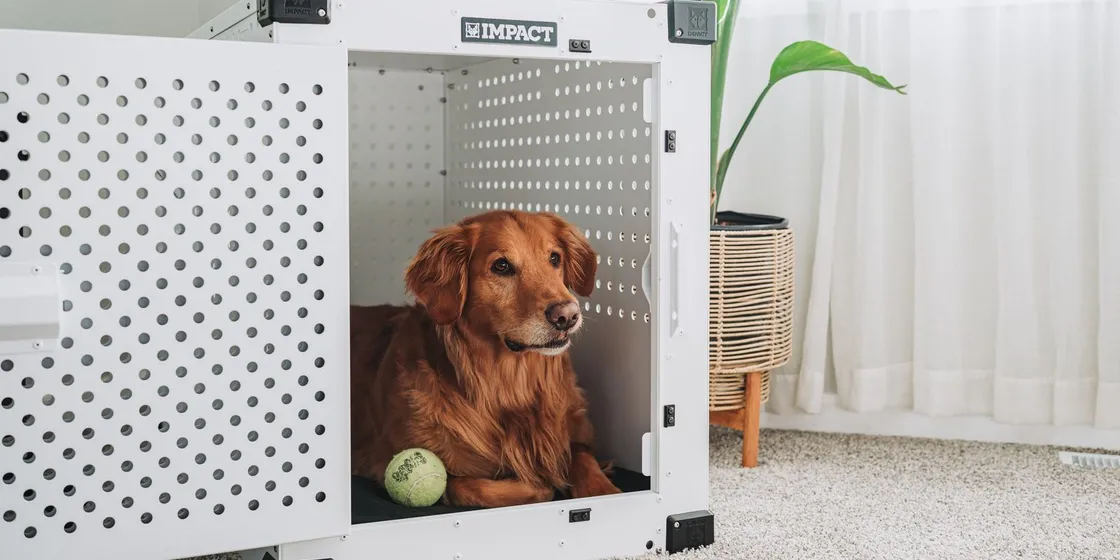
Crate training means teaching a dog, in small steps and with rewards, that a crate is a safe place to rest. The dog goes in voluntarily, the door is closed only briefly at first, and the time is extended slowly. A crate is useful for sleep, house training and transport, but it is not a place for punishment and not somewhere a dog should spend most of its day.
What a crate is good for and what it is not
Used properly, a crate offers a den-like resting place, makes nights and house training easier, keeps a puppy safe for short moments when nobody can watch it, and prepares the dog for car travel and stays at the vet.
A crate is not suitable for:
- Punishment or time-outs in anger. A dog that is sent to the crate after doing something wrong learns to avoid the crate.
- All-day confinement. A dog that is crated while its people work and again at night spends most of its life in a box. That does not meet its need for movement, social contact and exploration.
- Replacing training. A crate prevents chewing or barking only while the door is closed; it does not teach an alternative.
- Dogs that panic when alone. Confinement usually makes genuine separation distress worse.
Choosing size, type and location
The dog must be able to stand without ducking, turn around and lie on its side with legs stretched. For a growing puppy, buy the adult size and use a divider, because a crate that is too large invites the puppy to use one end as a toilet. Wire crates are well ventilated and can be covered with a blanket on three sides; plastic or fabric crates feel more enclosed. Fabric crates are not suitable for dogs that chew.
Put in a non-slip mat or blanket. Remove collars and harnesses before the dog goes in, so that nothing can get caught.
Crate training in 7 steps
Each step is repeated in short sessions of two to five minutes until the dog looks relaxed. For many puppies the whole sequence takes one to three weeks.
- Let the dog explore. Fix the door open so that it cannot swing shut. Scatter a few treats near the entrance, then just inside. Do not push or lure the dog further than it goes on its own.
- Feed inside. Place the food bowl just inside the entrance and move it further back with every meal. The dog can leave at any time.
- Add a cue. Toss a treat in, say “crate” or “bed” as the dog steps in, and reward again inside. After a dozen or so repetitions, give the cue first and reward once the dog is in.
- Reward lying down. Wait for the dog to lie down inside, then feed several treats one after another between the front paws. A stuffed chew toy lengthens the stay.
- Close the door briefly. While the dog is busy chewing, close the door for a few seconds, open it again before the dog has finished, and stay nearby. Extend to one, then five minutes.
- Add distance. With the door closed, take a few steps away, come back and drop a treat through the bars. Then leave the room for seconds, later for a few minutes. Return before the dog becomes restless.
- Extend the time and vary it. Build up to 30 minutes with you at home before you use the crate during short absences. Mix long and short repetitions so that the duration does not just keep rising.
Signs that the pace is right: the dog enters on its own, lies down, chews calmly or sleeps. Signs that it was too fast: whining that escalates, panting, drooling, scratching at the door or refusing food. Go back to the last step that worked. A basic understanding of dog body language helps to read these signals early.
How long can a dog stay in a crate?
The following times are common guidelines for the daytime, not targets. They assume that the dog has been outside, has had exercise and has been trained up to that duration.
| Age | Maximum during the day |
|---|---|
| 8–10 weeks | 30–60 minutes |
| 11–14 weeks | 1–3 hours |
| 15–16 weeks | 3–4 hours |
| From about 5 months and adult dogs | About 4 hours, with breaks |
At night dogs sleep and can stay longer, but young puppies still need one or two toilet trips; the crate schedule should match the one for house training a puppy. Across a full day, the hours in the crate should remain clearly in the minority.
The crate at night
Place the crate beside your bed for the first weeks. A puppy that has just left its litter settles more easily when it can hear and smell a person. Before bed, go outside once more, guide the puppy in with a treat and keep the room dark and quiet. If it stirs at night, take it out to toilet without play and put it back. Once it sleeps through, the crate can be moved a little further away every few nights if you wish.
Using the crate for short absences
Being alone is a separate skill from being in a crate and needs its own training. Start with seconds out of sight and extend gradually. Give the dog exercise and a toilet break beforehand, leave without a long goodbye and return calmly. A camera shows whether the dog rests or is distressed.
For dogs that mainly need to be kept away from furniture and cables, a pen or a dog-proofed room is often the kinder option for anything beyond an hour or two. What else helps against chewing is described in the guide on destructive chewing.
Common mistakes
- Closing the door too early, before the dog has chosen to lie down inside.
- Using the crate only when leaving, so that it comes to predict being alone. Short crate rests while you are at home prevent this.
- Opening the door during loud protest every time, or never. The better solution is a step small enough that protest does not arise.
- Sending the dog in as a penalty.
- Skipping exercise. A puppy full of energy cannot rest on command.
- Letting children reach into or climb into the crate. The crate is the dog’s retreat and is left alone when the dog is inside.
- Relying on the crate for too long each day instead of gradually giving the dog more freedom in the home.
When professional help is useful
Stop and get advice if the dog injures itself trying to get out, bends bars, drools heavily, soils the crate despite adequate toilet breaks, or still panics after a careful, slow build-up. These can be signs of confinement distress or separation anxiety, which require a different plan and often veterinary input. A qualified reward-based trainer or behavior consultant can assess the situation. Where crate training fits among the other early tasks is shown in the puppy training schedule.
Frequently asked questions
How long does crate training take?
Many puppies accept a crate as a sleeping place within a few days and can rest in it with the door closed for short periods after one to three weeks. Adult dogs without crate experience, or with bad experiences, may need several weeks. The pace is set by the dog: move to the next step only when the current one looks relaxed.
Should I let my puppy cry in the crate?
Brief fussing of a minute or two that then fades can be waited out. Persistent crying, howling, scratching or panting means the step was too big or the puppy needs to toilet. Take it out calmly, offer a toilet break, and make the next attempt shorter and easier. Leaving a puppy to scream teaches it that the crate is frightening.
Where should the crate be placed?
During the day, a quiet corner of the room where the family spends time works well, away from direct sun, radiators and drafts. At night, placing the crate next to your bed for the first weeks helps the puppy settle and lets you hear when it needs to go out. It can be moved gradually to its final place later.
Can I crate my dog while I am at work?
Not for a full working day. Even adult dogs should not spend more than about four hours at a stretch in a crate during the day, and puppies far less. For longer absences, a dog-proofed room or pen with water, a dog walker, day care or a midday visit are more suitable solutions.
Does my dog need a crate at all?
No. A crate is a tool, not a requirement. It can help with house training, safe travel, recovery after surgery and rest in a busy household. Many dogs manage just as well with a pen, a baby gate or a dog-proofed room. If a dog does not settle in a crate despite careful training, an alternative is the better choice.