Recall Training: How to Teach Your Dog to Come When Called
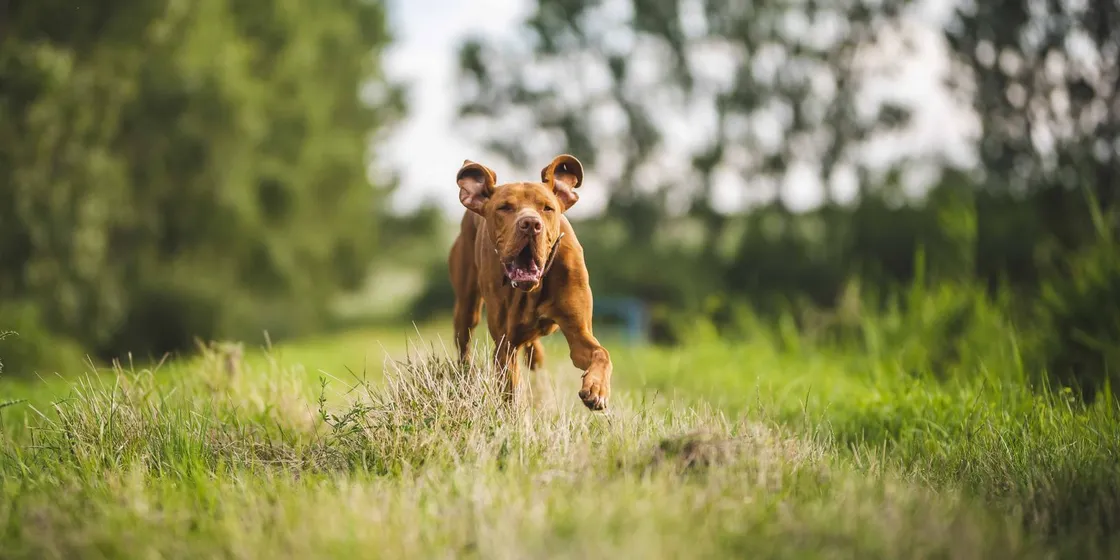
Key takeaways
- A recall cue is a promise: every time the dog hears it and comes, something very good happens.
- Charge the cue at close range first, then practice on a 5–10 m (16–33 ft) long line attached to a harness, never to a collar.
- Never call your dog for something they dislike, and never scold a dog that comes back late.
- A separate whistle recall, paired only with the best rewards, gives you a backup for emergencies.
- Add distance and distractions one at a time; no recall is ever fully guaranteed, so manage risk with a line where needed.
A reliable recall is built by pairing one specific cue with outstanding rewards, practicing first at short distances, and then adding distance and distractions slowly while a long line prevents failures. Expect good responses at home within one to two weeks and several months of practice before the cue holds in exciting environments. The most important rule is that coming to you must always pay off for the dog.
Why recall fails so often
From the dog’s point of view, coming back often ends the fun: the leash goes on, the walk is over, the game with another dog stops. Meanwhile the environment offers smells, movement, and play. A recall only works when the dog’s learning history says that turning toward you is, on average, the better deal. That is a matter of training, not of obedience or character, and it follows the same principles as all positive reinforcement training.
Choosing a cue
Pick a word or sound that fulfills three conditions:
- It is new. If “come” has been ignored a hundred times, it already means “optional”. Start over with a fresh word such as “here” or “to me”.
- It is short and distinct. One or two syllables, said in a bright, consistent tone.
- Everyone uses it the same way. Agree in the household on the exact word and on the rule that it is always rewarded.
The dog’s name is not a recall cue. Use the name to get attention, then give the cue.
Charging the cue
Before the cue means “run to me”, it has to mean “something great is coming”.
- Prepare 10–15 pieces of very good food, for example small cubes of cheese or cooked chicken.
- Stand right next to your dog in a quiet room. Say the cue once, then immediately give a treat. The dog does not have to do anything yet.
- Repeat 10–15 times per session, two sessions a day, for two to three days.
- Test: say the cue when the dog is looking away at a distance of 1–2 m (3–6 ft). If the head snaps around, the cue is charged.
From then on, take one or two steps backward as you say the cue, so the dog moves toward you. Mark the moment the dog turns with “yes” or a click and reward when they arrive. The marker timing is explained in the guide to clicker training.
Building distance indoors and in the garden
- Room to room. Call from 3–5 m (10–16 ft), reward with three or four treats in a row rather than one, and release the dog again.
- Ping-pong. Two people stand 5–10 m (16–33 ft) apart and call the dog back and forth, five times each.
- Hide and call. Call from another room or from behind a tree in the garden. Searching makes the game more exciting.
- Touch the harness. Before giving the reward, briefly take hold of the harness, then feed and release. This prevents the dog from dancing out of reach when you need to clip the leash on.
Aim for five to ten recalls a day, spread out, rather than one long drill.
Long line training
Outdoors, a long line keeps the dog safe and prevents them from learning that ignoring you is rewarding.
- Length: 5–10 m (16–33 ft). Shorter lines for small spaces and beginners, longer ones for open fields.
- Attachment: Always clip the long line to a well-fitted harness, never to a collar. A dog that hits the end of a 10 m line at full speed can injure the neck seriously.
- Handling: Wear gloves, keep the line free of knots, and do not wrap it around your hand. In open terrain you can let it drag and step on it if needed.
- Purpose: The line is a safety backup, not a tool for reeling the dog in. If the dog does not respond, gently stop further movement, shorten the distance yourself, and try again with an easier setup.
Practice like this:
- Let the dog explore at the end of the line.
- Wait for a moment when they are not deeply engaged, such as lifting the head from a sniff.
- Give the cue once. Move backward, sound cheerful.
- Mark the turn, reward on arrival with several treats or a short game.
- Say “go on” and let the dog return to what they were doing.
Step 5 matters: when most recalls end with renewed freedom, coming back stops predicting the end of fun.
Never poison the cue
A cue becomes “poisoned” when it predicts something unpleasant. To protect it:
- Do not call the dog for nail trims, baths, being left alone, or the end of play. In those cases, walk over and collect the dog calmly.
- Do not call when you are fairly sure the dog will not respond. Each ignored cue weakens it.
- Say the cue once. If nothing happens, change the situation rather than the volume.
- Never scold or grab a dog that arrives late. The return must stay safe.
- Call the dog several times on every walk just to reward and release, so that only a small share of recalls end with the leash.
Emergency whistle recall
An emergency recall is a second cue, kept separate from the everyday one and paired only with the very best rewards.
- Choose a distinct signal, such as one long blast or a double pip on a whistle.
- Charge it exactly like the spoken cue: whistle, then a jackpot such as a handful of treats fed one after another for 15–20 seconds.
- Practice once or twice a day at most, in easy situations, for two to three weeks.
- Afterward, refresh it once or twice a week and always pay generously.
- Use it in a real emergency only when needed, and reward heavily even then.
Because the whistle is rare and always followed by something exceptional, it tends to stay strong.
Proofing against distractions
Raise one factor at a time: distance, distraction, or environment.
| Level | Example distraction | Setup |
|---|---|---|
| 1 | None, quiet garden | Off line in a fenced area |
| 2 | Person standing 20 m (65 ft) away | Long line |
| 3 | Food bowl or toy on the ground at a distance | Long line, helper covers the item if needed |
| 4 | Calm dog on leash 20–30 m (65–100 ft) away | Long line |
| 5 | Dogs playing, birds, wildlife scent | Long line, start at a large distance |
Move to the next level when the dog responds promptly on about eight out of ten calls. If the response drops, increase distance to the distraction. Match the reward to the difficulty: a recall away from a running dog deserves more than one dry biscuit. Rewards can also be functional, for example being released to go and greet the other dog after coming back.
For dogs with strong hunting motivation, a long line may remain necessary near wildlife for life. That is responsible management rather than a training failure. Reading early signs of fixation in your dog’s body language lets you call before the chase begins.
Common mistakes
- Calling only when the walk ends. The cue becomes a predictor of the leash.
- Repeating the cue. “Here, here, HERE” teaches the dog to wait for the third call.
- Rewarding too little. One piece of kibble cannot compete with a squirrel.
- Going off leash too early. Each successful escape is a powerful reward for ignoring you.
- Chasing the dog. For most dogs that is a game. Moving away from the dog works better.
- Standing stiff and sounding angry. A tense voice and posture make approaching less inviting.
- Stopping practice once it works. Recall needs regular, well-paid repetitions throughout the dog’s life.
When professional help makes sense
Seek a qualified, reward-based trainer if your dog chases wildlife, livestock, joggers, or cyclists, if they bolt in panic at noises, or if months of consistent practice bring no progress. If a previously reliable dog stops responding, have a vet check hearing and rule out pain, especially in older dogs.
Recall is easier when the dog already walks calmly near you and knows a few everyday cues. The guides to loose leash walking and basic dog commands cover those foundations, and puppies can start with the short exercises in the puppy training schedule.
Frequently asked questions
How long does it take to train a reliable recall?
Most dogs respond well in the house and garden after one to two weeks of daily practice. A recall that holds up around other dogs, wildlife, and open spaces usually takes several months of training on a long line. Adolescent dogs between roughly six and eighteen months often become less responsive for a while. Going back to easier setups during that phase is normal.
What should I do if my dog ignores the recall cue?
Do not repeat the cue, because repetition teaches the dog that the first call is optional. Shorten the distance instead, make yourself interesting by moving away or crouching, and reward warmly when the dog arrives. Then make the next few repetitions much easier. If the dog ignores the cue often, the distraction level is too high for the current stage of training.
Can I use a retractable leash instead of a long line?
A retractable leash is a poor substitute. It keeps constant tension on the dog, the thin cord can cause burns and cuts, and the handle is easily dropped and then clatters behind a frightened dog. A flat or round long line of 5 to 10 meters attached to a harness gives a truer feeling of freedom and is safer to handle with gloves.
Should I punish my dog for coming back late?
No. The dog connects your reaction with the last thing they did, which was coming to you. Scolding at that moment makes returning less attractive and the next recall slower. Reward the return, even if it took a while, and treat the delay as information: the situation was too difficult, so the next sessions need more distance from distractions or a long line.
Is a whistle better than a verbal recall cue?
A whistle has practical advantages: it carries farther than a voice, sounds the same no matter who uses it, and does not reveal frustration or worry. That makes it well suited to an emergency recall. A spoken cue is always available and works fine for everyday use. Many owners train both and reserve the whistle for the highest-value rewards.