Labrador Retriever: Breed Profile, Temperament and Training
Key takeaways
- Labradors are friendly, highly trainable retrievers that need one to two hours of exercise plus mental work every day.
- Working-line Labradors are lighter and more driven; show-line dogs are heavier and usually calmer, but both need a job.
- Strong food motivation makes training easy and weight control hard: measure meals and take training treats out of the daily ration.
- Mouthiness and carrying things are bred in; channel them into retrieving games instead of trying to suppress them.
- Ask breeders for hip, elbow and eye screening results, and keep your dog lean to protect the joints.
Breed profile
- Height
- 54–57 cm (21.5–24.5 in)
- Weight
- 25–36 kg (55–80 lb)
- Life expectancy
- 10–13 years
- Group
- Retrievers (FCI Group 8 / AKC Sporting)
- Origin
- Newfoundland (Canada), developed in Great Britain
- Energy level
- High
- Trainability
- Very high
- Temperament
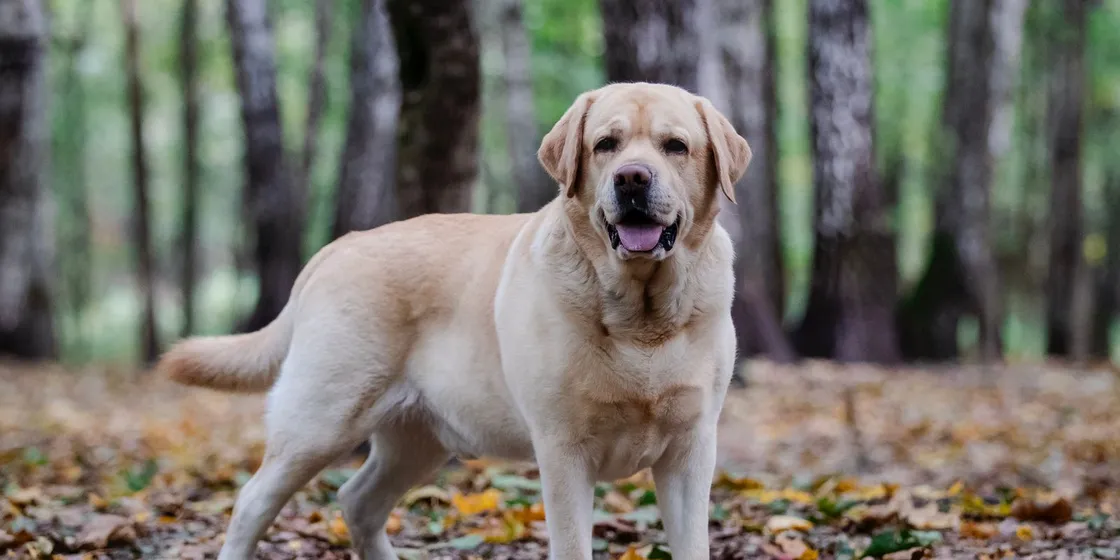
The Labrador Retriever is a medium-to-large gundog that is friendly, cooperative and very easy to motivate, which makes it one of the most trainable breeds. It suits active people who can provide one to two hours of exercise and some mental work every day and who are willing to manage food strictly. Without that, Labradors tend to become overweight, boisterous and inventive in ways owners do not enjoy.
Origin and history
Despite the name, the breed’s roots are on the island of Newfoundland, not in Labrador. Fishermen there kept the St. John’s water dog, a short-coated, water-loving dog that helped haul in nets and retrieved fish and lines from cold water. In the early 19th century, British aristocrats imported some of these dogs and developed them into a specialist retriever for the shooting field. The Kennel Club in Britain recognized the Labrador Retriever in 1903, and the American Kennel Club followed in 1917. The St. John’s water dog itself later died out.
That working history explains most of what you see today: the dense, water-repellent double coat, the thick “otter” tail, the soft mouth, the love of water and the readiness to work closely with a person for hours.
Appearance and breed standard
Labradors are strongly built with a broad head, a deep chest and a short, weather-resistant coat in black, yellow (from pale cream to fox red) or chocolate. The FCI standard gives an ideal height of 56–57 cm for males and 54–56 cm for females. The AKC standard is slightly taller at 22.5–24.5 inches for males and 21.5–23.5 inches for females, with weights of 65–80 lb (about 29–36 kg) and 55–70 lb (about 25–32 kg). Life expectancy is typically 10 to 13 years.
Working lines and show lines
There is one breed and one standard, but breeding goals have diverged.
- Working (field) lines are selected for performance: lighter and more athletic, with a narrower head, a great deal of stamina and a strong desire to retrieve. They learn fast and need structured tasks. Without them they can be restless.
- Show (bench) lines are selected for conformation: heavier bone, broad head, thicker coat and tail, and often a steadier, more laid-back manner. They gain weight more readily and still need daily exercise and training.
Many family Labradors are somewhere in between. When choosing a puppy, meet the parents, ask what the breeder selects for, and be honest about how much time you have. A high-drive working-line dog in a household that wants a quiet companion is a common mismatch.
Temperament
A typical Labrador is outgoing, people-oriented and tolerant, with little guarding instinct and no built-in suspicion of strangers. That friendliness comes with enthusiasm: young Labradors greet with their whole body, pull toward people and dogs, and mature slowly, often staying adolescent in behavior until two or three years of age. Good puppy socialization should therefore include calm exposure and learning to do nothing, not only meeting as many people and dogs as possible.
Training a Labrador
Labradors respond extremely well to reward-based training. They work for food, for retrieves and for social contact, so you have plenty of reinforcers to choose from.
Food motivation and weight management
Appetite is the breed’s biggest training advantage and its biggest health risk. A study by Raffan and colleagues (Cell Metabolism, 2016) identified a POMC gene variant in a proportion of Labradors that is associated with higher food motivation and body weight. In practice that means your dog’s begging says nothing reliable about need.
- Weigh the daily ration on a kitchen scale instead of using a scoop.
- Take training treats out of that ration, or use part of the kibble as rewards.
- Check body condition every two weeks: you should feel the ribs easily under a thin layer and see a waist from above.
- Keep food out of reach. Counters, bins and bags are irresistible, and each successful raid makes the next attempt more likely.
- Teach a calm default around food, such as sitting on a mat during meal preparation.
Ask your vet for a target weight, especially after neutering, when energy needs often drop.
Mouthiness and retrieving drive
Labradors were bred to carry things, and they explore with their mouths well beyond puppyhood. Suppressing this rarely works; directing it does.
- Keep a toy near the door and hand it over at greetings. A dog carrying something jumps and mouths less.
- Teach a swap: offer a treat for anything the dog picks up, so objects are brought to you instead of being run off with.
- Build a formal retrieve with a dummy: hold, carry, deliver to hand.
- For needle-toothed puppies, follow the steps in our guide to puppy biting, and offer legal chews to head off destructive chewing.
Leash manners, recall and calm greetings
An adult Labrador is strong enough to pull an adult over, so start loose leash walking from the first week. Build recall early and proof it specifically around water, food on the ground and other dogs, the three things most Labradors find hardest to leave. Reward four paws on the floor every time someone approaches.
Exercise and mental work
Plan for about one to two hours a day for a healthy adult, divided into walks, free movement and tasks.
- Retrieving and dummy work: searching for hidden dummies, waiting before being sent, marking where something fell. Ten minutes of this tires a Labrador more than a long ball session.
- Nose work: scatter feeding in grass, finding hidden objects, tracking a person.
- Swimming: excellent, low-impact exercise. Introduce water gradually and dry the ears afterward.
- Rest: teach settling on a mat. A Labrador that only knows action will keep asking for it.
Avoid endless ball throwing, which builds arousal and loads the joints, and keep exercise for growing dogs moderate and varied.
Health
Labradors are generally robust, but several conditions occur more often in the breed.
- Hip and elbow dysplasia: developmental joint disorders with a hereditary component. Responsible breeders have the parents’ hips and elbows X-rayed and scored.
- Obesity: very common and it worsens joint disease. A long-term feeding study in Labradors (Kealy and colleagues, 2002) found that dogs kept lean lived longer and developed chronic disease later than their more heavily fed littermates.
- Eye conditions: progressive retinal atrophy (PRA) and hereditary cataracts. DNA tests and regular eye examinations of breeding dogs are standard.
- Exercise-induced collapse (EIC): a hereditary condition for which a DNA test exists.
- Ear infections: drop ears and frequent swimming create a warm, moist ear canal.
Ask the breeder for documented screening results, and see your vet if you notice lameness, stiffness after rest, reluctance to jump or changes in vision.
Labrador or Golden Retriever?
The two breeds share purpose and temperament. Labradors are usually more exuberant, more food-focused and easier to groom; the Golden Retriever tends to be somewhat softer in manner and needs regular coat care. Either is a sound choice for an active first-time owner who trains consistently.
Common mistakes
- Feeding by eye. Portions creep up, and a few extra kilos arrive quietly.
- Only physical exercise. More running builds a fitter dog, not a calmer one. Add tasks and rest.
- Allowing on-leash greetings with everyone. It teaches pulling and frustration.
- Scolding for carrying things. The dog learns to run off with the item. Trade instead.
- Underestimating adolescence. Between about 6 and 18 months, skills fade for a while. Go back a step and keep rewarding.
Who the Labrador suits
A good match: active individuals and families who like being outdoors in all weather, enjoy training, can tolerate hair and wet dog, and have time every day. A poor match: households that want a low-energy dog, are away for long working days, or find it hard to say no to a pleading look at the dinner table. If you plan dog sports, dummy work or assistance tasks, look at working or dual-purpose lines; for a steady companion, a moderate show-bred or mixed line is usually easier to live with.
Frequently asked questions
Are Labradors good family dogs?
Usually yes, provided the family has time for them. Labradors are typically sociable, tolerant and keen to be involved. Young Labradors are also strong, bouncy and mouthy, which can overwhelm small children. Plan for daily exercise and training, supervise dog and children together, and teach calm greetings early. An under-exercised adolescent Labrador is hard work in any household.
How much exercise does a Labrador need?
A healthy adult Labrador generally needs about one to two hours of activity a day, split into walks, free running or swimming, and tasks that use the nose and brain, such as retrieving or searching. Working-line dogs often need more mental work. Puppies and adolescents need shorter, varied outings and plenty of rest; ask your vet about suitable loads while the joints are developing.
Why is my Labrador always hungry?
Strong appetite is typical of the breed. A 2016 study in Cell Metabolism found a variant in the POMC gene in some Labradors that is linked to greater food motivation and higher body weight. Hunger signals are therefore not a reliable guide to how much to feed. Weigh meals, check body condition regularly and use part of the ration for training.
What is the difference between working and show Labradors?
Both belong to the same breed and share one standard. Working or field lines are bred for performance in the shooting field: lighter build, narrower head, more stamina and drive. Show lines are bred for conformation: stockier, broader head, thicker coat and often a calmer manner. Individual dogs vary, so meet the parents and ask what the breeder selects for.
Do Labradors shed a lot?
Yes. The short, dense double coat sheds all year and heavily during the seasonal coat change in spring and autumn. Brushing once or twice a week, and daily during heavy shedding, keeps loose hair under control. The coat is weather-resistant and should not be clipped. Bathing is only needed occasionally; rinse and dry the ears after swimming.
Labrador or Golden Retriever: which is easier to train?
Both are among the most trainable breeds and respond very well to reward-based methods. Labradors tend to be more boisterous and food-driven with a short, low-maintenance coat. Golden Retrievers are often a little softer and more sensitive and need regular coat care. The line and the individual dog matter more than the breed name.
Sudden changes in behavior, signs of pain or any aggression should be checked by a veterinarian or a qualified behavior professional before you start training.