Puppy Biting: How to Stop Nipping and Mouthing Kindly
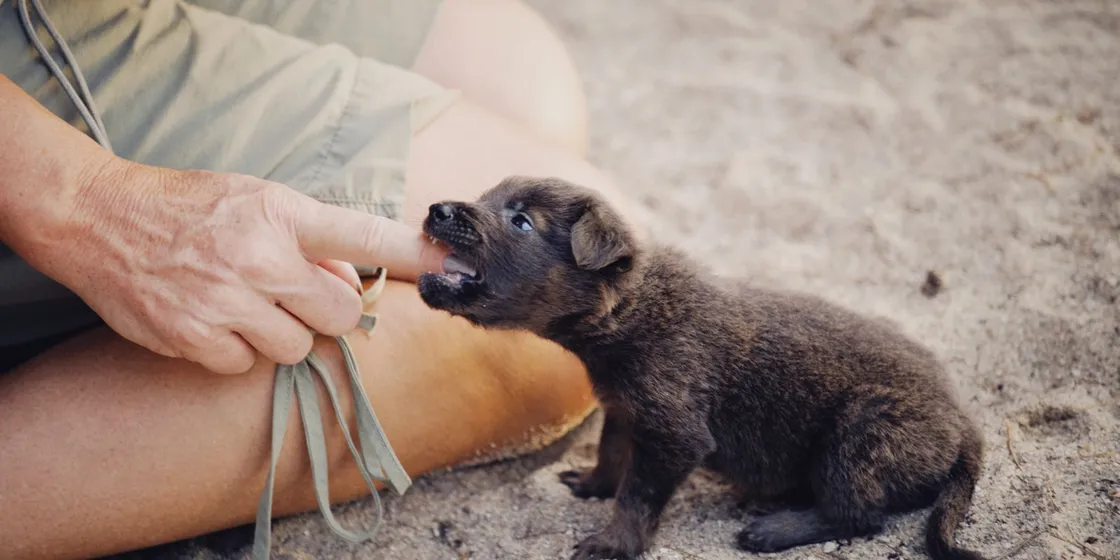
Key takeaways
- Nipping and mouthing are normal puppy behavior driven by play, exploration, teething, and overtiredness, not by aggression or dominance.
- Redirect teeth to a toy before they reach skin, and pause play for 10–30 seconds when they do.
- An overtired puppy bites harder; regular naps in a quiet place reduce biting more than any correction.
- Children and puppies need active adult supervision and clear rules for both sides.
- Mouthing usually eases noticeably once the adult teeth are in at around six to seven months; stiff, tense biting warrants professional advice.
Puppy biting is normal behavior: puppies explore with their mouths, play with their teeth, and bite more when they are teething or overtired. You reduce it by redirecting to toys before teeth touch skin, pausing play briefly when they do, and making sure the puppy gets enough sleep. With consistent handling, most puppies become much gentler within a few weeks, and mouthing usually fades noticeably by about six to seven months.
Why puppies bite
A puppy that nips is not being aggressive or trying to dominate anyone. Typical causes:
- Play. Puppies play with their littermates using their mouths. They apply the same style to people until they learn otherwise.
- Exploration. A puppy’s mouth is their hand. Everything new is tested with the teeth.
- Teething. Baby teeth are replaced by adult teeth from roughly 12–16 weeks until about six to seven months. Gums are sore during this time and chewing brings relief.
- Overtiredness and overstimulation. Puppies need a lot of sleep, often cited as around 18–20 hours a day. A puppy that has been awake too long loses self-control and bites harder and more frantically.
- Attention. Squealing, pulling hands away, and pushing the puppy off are exciting. From the puppy’s view, biting has started a great game.
- Frustration or discomfort. Being restrained, picked up, or handled when the puppy does not want it can also lead to mouthing.
Knowing the cause helps you choose the right response. A puppy biting out of tiredness needs a nap, not a training session.
Bite inhibition: learning to be gentle
Bite inhibition is a dog’s ability to control the force of their jaws. Puppies begin to learn it with their littermates: if one bites too hard, the other usually stops playing. This is one reason why puppies should stay with their litter until at least eight weeks.
You continue this learning at home. The goal in the first weeks is not zero mouth contact at once but softer and softer contact, then less and less of it:
- First, react to hard bites. Any bite that hurts ends the game immediately.
- Then, react to moderate pressure. After one to two weeks, stop play for any noticeable pressure.
- Finally, teeth on skin end play altogether. By around four to five months, aim for the rule that teeth do not touch people at all.
A dog that has learned to control its jaw is safer for life, including in situations where it is startled or in pain.
Step by step: what to do when your puppy bites
- Keep a toy within reach. Place tug toys in every room and carry one in your pocket. A toy 30–50 cm (12–20 in) long keeps hands away from teeth.
- Redirect early. When the puppy approaches with an open mouth, present the toy and move it along the floor away from the puppy. Praise when they grab it. Movement is what makes a toy more attractive than your hand.
- Go still if teeth touch skin. Stop moving your hand. Do not pull it away quickly, since that triggers chasing. Say a calm “ouch” if it helps your puppy pause.
- Pause play for 10–30 seconds. Stand up, fold your arms, and turn away. If the puppy keeps biting at clothes or legs, step over a baby gate or leave the room for the same short time.
- Resume and give the puppy a job. Come back calmly, offer the toy again, or ask for a simple sit and reward it. The puppy learns that gentle play continues and biting stops the fun.
- Repeat consistently. Expect to do this many times a day for several weeks. If the third pause in a row does not help, the puppy is probably overtired: time for a nap.
The pause is not a punishment that has to hurt or frighten. It is simply the removal of what the puppy wants, your attention, for a few seconds. Longer time-outs do not work better, because the puppy no longer connects them with the bite.
Reward calm behavior
Puppies repeat what earns attention. Do not wait for biting to respond to your puppy:
- Mark and reward moments when the puppy sits, lies down, or approaches with a closed mouth.
- Stroke the puppy only when they are calm, with slow movements along the chest or side rather than quick pats over the head.
- Practice gentle handling: touch a paw, give a treat; touch an ear, give a treat. Keep it short.
- Use short training sessions to work the brain. A simple sit from the basic dog commands guide gives the puppy a way to ask for things without teeth.
Enforced naps: sleep as biting prevention
Many puppies do not settle on their own in a busy household. Help them:
- Plan a rest after every active phase. A rough guide for young puppies is about one hour awake followed by one to two hours of sleep.
- Use a quiet, comfortable place: a pen or a crate the puppy has been introduced to positively. The crate training guide explains how.
- Offer a chew or a stuffed food toy to help the puppy wind down.
- Watch for signs of tiredness: frantic biting, zooming around, barking at you, ignoring cues the puppy normally knows.
- Start the rest before the typical “witching hour” in the early evening, not during it.
A regular daily rhythm of sleep, toilet breaks, play, and short training makes biting more predictable and easier to manage. The puppy training schedule gives an example.
Chewing needs and teething
Give the puppy plenty of permitted things to chew, in different textures: rubber toys, rope toys, and age-appropriate chews. Rotate them every few days so they stay interesting. Many puppies like chilled items during teething, such as a damp cloth that has been cooled in the fridge or a chilled rubber toy. Supervise chewing and remove anything that splinters or becomes small enough to swallow. If furniture and shoes are affected as well, see the guide to destructive chewing.
Children and puppies
Children are bitten more often because they move quickly, squeal, and have their hands and faces at puppy level. A few rules keep both sides safe:
- Supervise actively. An adult should be in the room and watching. If that is not possible, separate puppy and child with a gate or pen.
- “Be a tree.” Teach children to stand still, fold their arms, and look away when the puppy nips. Running and screaming make it worse.
- Play with toys, not hands. Long tug toys or throwing a toy are suitable. Wrestling, chasing, and hugging are not.
- Leave a resting or eating puppy alone. The sleeping place is off limits for children.
- Keep interactions short. A few calm minutes are better than half an hour that ends in tears.
Young children should not be responsible for training the puppy or for giving time-outs.
Common mistakes
- Pulling hands away quickly or flapping them. This turns hands into prey.
- Rough play with hands. Wrestling with bare hands teaches the puppy that skin is a toy.
- Physical corrections. Holding the muzzle shut, tapping the nose, or pinning the puppy creates fear and can lead to defensive biting.
- Inconsistency. If one family member allows mouthing, the puppy cannot learn the rule.
- Too much activity. Trying to tire the puppy out usually produces an overtired puppy that bites more.
- Pauses that are too long or too late. The response must come within a second or two and last only seconds.
- Expecting quick results. Progress is gradual, and a bad day after a good week is normal.
When to get professional help
Normal puppy mouthing happens in play, with a loose, wiggly body. Contact a qualified, reward-based trainer or behavior consultant if:
- the puppy freezes, goes stiff, stares, or growls before biting, especially around food, chews, toys, or when being handled;
- bites regularly break the skin despite several weeks of consistent training;
- biting does not ease at all after six to seven months of age;
- you feel unsafe, or children in the household are being bitten repeatedly.
See a vet if a puppy cries out when touched, bites when a particular body part is handled, or if the behavior changes suddenly; pain may be involved. Learning to read early warning signals in dog body language helps you tell playful mouthing from discomfort.
Frequently asked questions
At what age do puppies stop biting?
Most puppies mouth most intensely between about eight and sixteen weeks. With consistent handling, the biting becomes gentler and less frequent over the following weeks, and it usually eases clearly once the adult teeth have come in at around six to seven months. Some adolescent dogs still grab with their mouths when overexcited and need continued practice with calm alternatives.
Should I yelp when my puppy bites me?
A short, calm 'ouch' followed by stopping play works for some puppies. Others become more excited by a high-pitched yelp and bite harder. Watch your puppy's reaction: if the sound makes them pause and soften, you can keep using it. If it winds them up, skip the sound and simply go still or step away for a few seconds.
Why does my puppy bite more in the evening?
Evening biting frenzies are usually a sign of overtiredness and too much stimulation during the day rather than excess energy. A puppy who has missed naps loses self-control, much like an overtired toddler. More exercise tends to make it worse. A quiet rest in a pen or crate with a chew, started before the usual frenzy time, generally helps more.
Is it okay to hold my puppy's mouth shut or tap the nose?
No. Holding the muzzle, tapping the nose, pinning the puppy down, or shouting can frighten the puppy, make hands near the face seem threatening, and increase biting or lead to defensive behavior later. These methods also teach nothing about what to do instead. Redirecting to a toy, pausing play, and providing enough rest are both kinder and more effective.
My puppy bites my clothes and ankles when I walk. What can I do?
Moving feet and flapping fabric trigger chasing. Stand still the moment the puppy grabs, so the game stops being fun, and offer a tug toy held low or dragged along the floor. Reward a few steps of walking next to you without grabbing. In the meantime, wear plain, close-fitting trousers and keep a toy in your pocket during the times this happens.
Sudden changes in behavior, signs of pain or any aggression should be checked by a veterinarian or a qualified behavior professional before you start training.