Golden Retriever: Breed Profile, Temperament and Training Guide
Key takeaways
- Golden Retrievers are friendly, people-focused gundogs that learn quickly with reward-based training but mature slowly and stay boisterous for two to three years.
- An adult needs roughly one to two hours of exercise a day plus mental work such as retrieving and scent games.
- The main training topics are calm greetings, a soft mouth, loose-leash walking and recall around distractions.
- Known health risks include hip and elbow dysplasia, eye and heart disease, cancer and a strong tendency to gain weight.
- The breed sheds heavily and does poorly when left alone for long working days.
Breed profile
- Height
- 51–61 cm (20–24 in)
- Weight
- 25–34 kg (55–75 lb)
- Life expectancy
- 10–12 years
- Group
- Retrievers (FCI Group 8 / AKC Sporting)
- Origin
- Scotland
- Energy level
- High
- Trainability
- Very high
- Temperament
The Golden Retriever is a medium-to-large gundog from Scotland: friendly, people-oriented and very willing to learn, but also energetic, slow to mature and heavy-shedding. It suits active households that can provide one to two hours of daily exercise, regular mental work and company for most of the day. Training is straightforward with reward-based methods; the main work lies in calm greetings, a soft mouth, leash manners and recall.
Origin and purpose
The breed was developed in the Scottish Highlands in the second half of the 19th century. Dudley Marjoribanks, later Lord Tweedmouth, bred a yellow retriever to a Tweed Water Spaniel on his Guisachan estate and built a line of dogs that could retrieve shot game from land and cold water. The Kennel Club in Britain recognized the breed in the early 20th century; the American Kennel Club followed in 1925.
That working background explains most of today’s behavior: Goldens like carrying things in their mouths, love water, work closely with a person and have stamina for long days outdoors.
Size and appearance
According to the breed standards, males stand about 56–61 cm (22–24 in) at the shoulder and females about 51–56 cm (20–22.5 in). The AKC standard gives 65–75 lb (about 29–34 kg) for males and 55–65 lb (about 25–29 kg) for females; the FCI standard does not specify a weight. Many pet Goldens are heavier than that, usually because they are overweight.
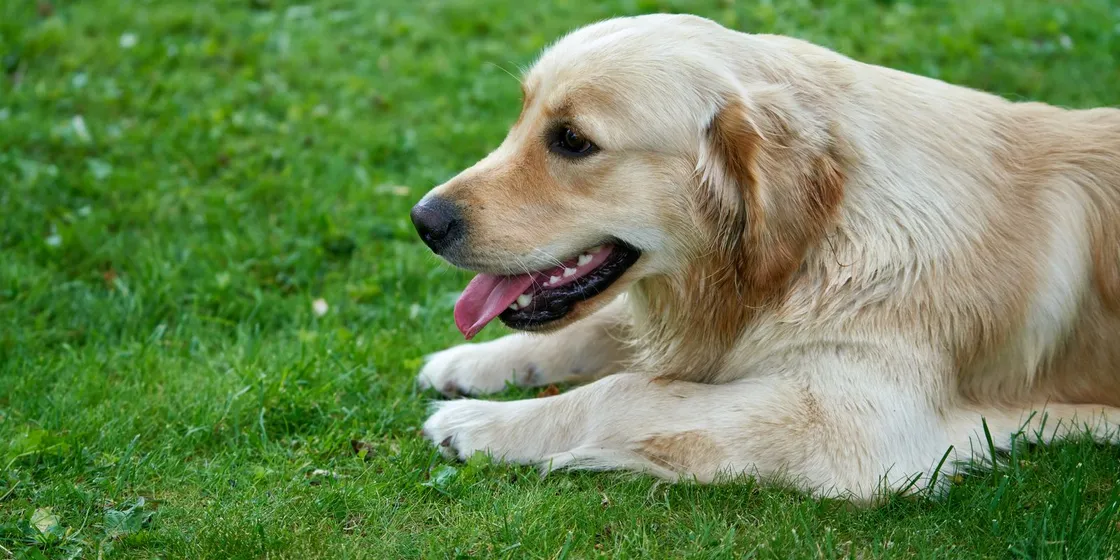
The coat is a dense, water-repellent double coat, flat or wavy, with feathering on legs, chest and tail. The color ranges from cream to dark gold. You will often read about “American”, “British” and “Canadian” types, or about “English Cream” Goldens. These are informal descriptions of regional breeding styles and of a color, not separate breeds. More relevant for daily life is whether a dog comes from working lines (lighter build, more drive) or show lines (heavier build, often calmer).
Temperament
Typical Goldens are friendly toward strangers, tolerant with children, sociable with other dogs and strongly oriented toward their people. They are poor guard dogs. The other side of that friendliness is over-excitement: many young Goldens want to greet everyone, at full speed.
They also mature late. Expect puppy-like behavior, short attention spans and a lot of physical energy until two or three years of age. Individual dogs differ, and poor socialization or harsh treatment can produce fearful or reactive dogs in this breed as in any other.
Exercise and mental work
- Adults: roughly one to two hours a day, combining walks, free running, swimming and structured tasks.
- Puppies and adolescents: several short outings, a lot of sleep, no forced running, no stairs marathons and no repeated jumping while the skeleton is developing.
- Mental work: retrieving with a dummy, searching for hidden objects, scent games and trick training. Ten minutes of search work often tires a Golden more than a long walk.
Activities that fit the breed well include dummy work and other retrieving sports, scent work or mantrailing, swimming and, for fully grown and healthy dogs, agility. Because of their temperament, Goldens are also frequently trained as assistance, therapy and search-and-rescue dogs. That work requires careful selection and structured training with a specialized organization, often over one to two years, and not every Golden is suited to it.
Training focus: what matters most for a Golden
Goldens respond very well to food, play and praise. Harsh methods are unnecessary and damage the trust this breed relies on. These are the priorities, in rough order:
- Socialization with calm, not just contact. Between about 8 and 16 weeks, let the puppy experience people, dogs, surfaces and sounds in a relaxed way. Reward watching calmly instead of letting the puppy greet everyone. See the puppy socialization guide.
- A soft mouth. Retrievers explore with their mouths and Golden puppies mouth hands and clothing a lot. Redirect to a toy, end play briefly when teeth touch skin and provide plenty of legal things to carry. Details are in the guide to puppy biting.
- Calm greetings. A 30 kg (65 lb) dog that jumps up is a real problem. Reward four paws on the floor from the first day and ask visitors to greet only when the dog is standing or sitting. The steps are in the guide on jumping up.
- Loose-leash walking. Start before the dog is strong. Reward the position next to your leg every few steps, stop when the leash tightens, and practice first without distractions. A front-clip harness can make pulling less effective while you train. See loose-leash walking.
- Recall around people and dogs. The biggest distraction for a Golden is another living being. Build the recall with high-value rewards, use a long line outdoors and practice at a distance from other dogs before expecting it up close. See recall training.
- Structured retrieving. Teach take, hold, bring and release as separate steps, and add waiting before being sent. Controlled retrieving builds impulse control; endless ball throwing does the opposite and stresses the joints.
- Being alone. Practice short absences from puppyhood. A breed this attached to people needs to learn that alone time is normal and safe.
Sessions of two to five minutes, several times a day, work best. Expect a dip in adolescence, roughly between 6 and 18 months, when known cues suddenly seem forgotten. Go back a step, manage with the long line and keep rewarding.
Grooming and everyday care
Brush two to three times a week and daily during heavy shedding. Check and dry the ears after swimming, since drop ears with a lot of hair are prone to infections. Trim the hair between the paw pads and keep nails short. Do not shave the coat.
Weight control is part of care. Goldens are enthusiastic eaters. You should be able to feel the ribs easily under a thin layer of fat. Weigh the food, count training treats as part of the daily ration and ask your vet to assess body condition at check-ups.
Health
The breed has several well-documented risks:
- Hip and elbow dysplasia. Reputable breeders have both parents screened.
- Eye diseases, including progressive retinal atrophy, cataracts and pigmentary uveitis.
- Heart disease, in particular subvalvular aortic stenosis.
- Cancer. It is reported more often in Golden Retrievers than in many other breeds and is the subject of a long-running cohort study in the United States, the Golden Retriever Lifetime Study.
- Skin and ear problems, including allergies, hot spots and the hereditary skin condition ichthyosis.
- Obesity, which worsens joint problems.
Ask breeders for the official health results of both parents (hips, elbows, eyes, heart and relevant genetic tests) and be cautious with sellers who advertise rare colors at premium prices but cannot show these documents. Adult Goldens also regularly need new homes through breed rescues and shelters. For diagnosis and treatment questions, your vet is the right contact.
Is a Golden Retriever right for you?
A good match if you:
- enjoy being outdoors daily in any weather
- want a dog that takes part in family life and can come along
- like training and can offer regular retrieving or scent tasks
- can live with hair, mud and wet-dog smell
Less suitable if you work full-time away from home without care arrangements, want a low-maintenance coat, or are looking for a guard dog. If you are comparing the two popular retrievers, the Labrador profile describes the differences.
Common mistakes
- Relying on the breed’s reputation. A Golden does not arrive trained. Without practice, friendliness turns into pulling, jumping and running off to greet.
- Letting the puppy greet everyone. This teaches that people and dogs are always more interesting than you.
- Too much ball throwing. It raises arousal, strains joints and can become compulsive.
- Over-exercising a growing dog, or the reverse: too little activity for an adult.
- Overfeeding. Extra weight is the most common avoidable health problem in the breed.
- Long days alone. Barking, chewing and distress are the usual result.
When to get professional help
A good reward-based puppy and adolescent class is worth it for almost every Golden, mainly to practice staying calm around other dogs. Seek a qualified behavior professional if the dog growls or snaps over food or toys, panics when left alone or shows fear or aggression toward people or dogs. A sudden change in behavior, reluctance to move or reacting to touch should be checked by a vet first, since joint and ear pain are common in the breed.
Frequently asked questions
Are Golden Retrievers easy to train?
They are among the easier breeds to teach, because they are food-motivated, like working with people and were bred to cooperate with a handler. Easy to teach does not mean calm by default. Young Goldens are strong, excitable and easily distracted by people and dogs, so greetings, leash walking and recall need consistent practice for the first two to three years.
How much exercise does a Golden Retriever need?
A healthy adult usually needs about one to two hours of activity a day, split into walks, free running, swimming or retrieving, plus some mental work. Puppies need much less: several short outings and plenty of sleep. Avoid forced running, repeated ball chasing and jumping while the dog is still growing, and ask your vet when more demanding exercise is appropriate.
Are Golden Retrievers good family dogs?
Usually yes. The breed is typically patient, sociable and tolerant, which suits family life. A young Golden is also heavy and exuberant enough to knock over a small child, and puppies mouth a lot. Supervise all contact with young children, teach calm greetings early and give the dog a retreat where it is left alone.
Do Golden Retrievers shed a lot?
Yes. They have a dense, water-repellent double coat that sheds all year and heavily in spring and autumn. Brushing two to three times a week, daily during heavy shedding, keeps loose hair and matting under control. The coat should not be shaved, as it insulates against both cold and heat. Ears need regular checks, especially after swimming.
What is the difference between a Golden Retriever and a Labrador?
Both are retrievers of similar size with friendly, trainable temperaments. The Golden has a longer, feathered coat that needs more grooming, while the Labrador has a short, dense coat. Many owners describe Goldens as slightly softer and more sensitive and Labradors as more robust and boisterous, but individual differences and breeding lines matter more than the breed average.
Can a Golden Retriever be left alone during the day?
An adult that has been taught gradually can usually manage about four hours, some a little longer. A full working day alone is too long for this people-oriented breed and often leads to barking, chewing or distress. Build up alone time in small steps from puppyhood and arrange a dog walker or day care for longer absences.
Sudden changes in behavior, signs of pain or any aggression should be checked by a veterinarian or a qualified behavior professional before you start training.